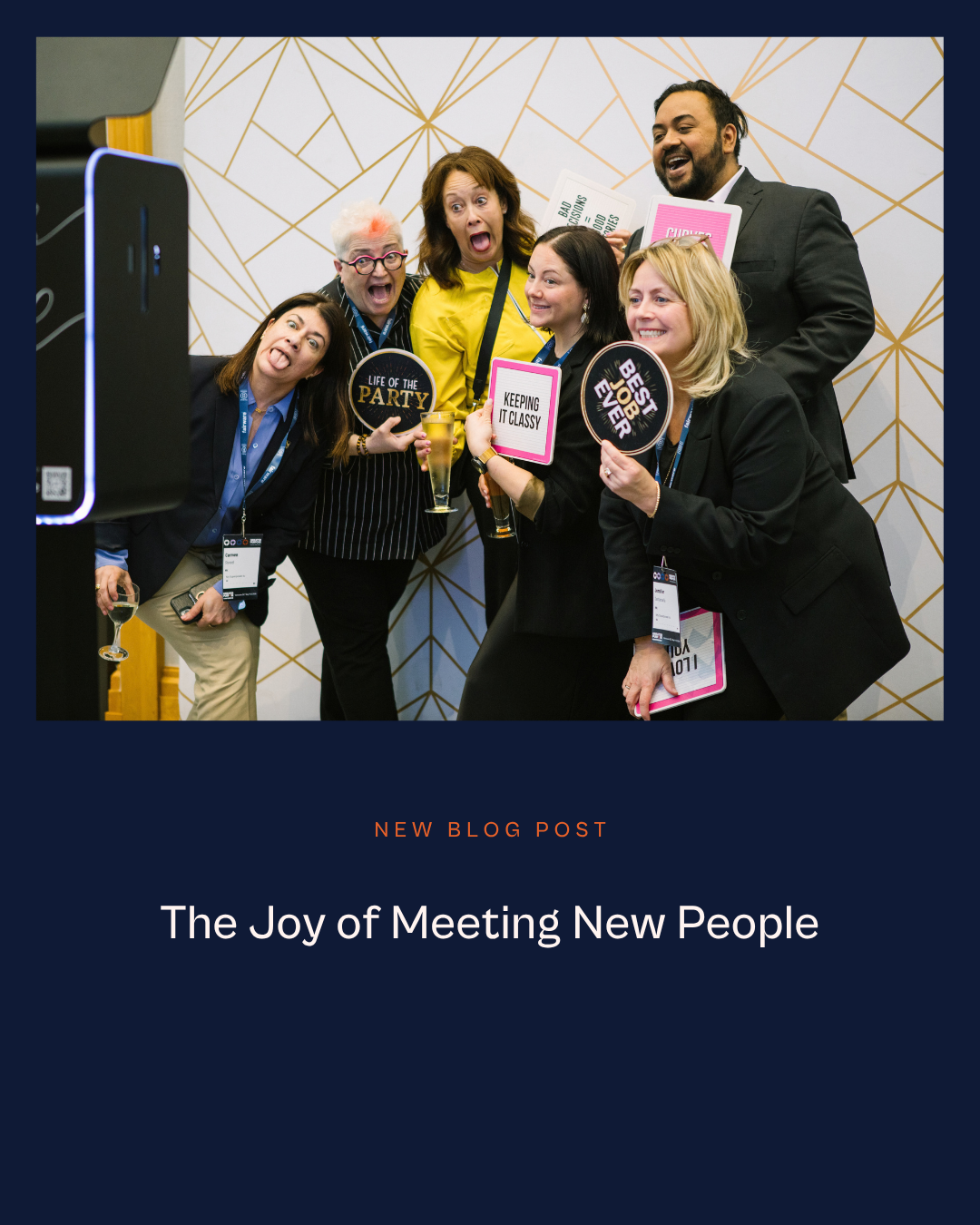

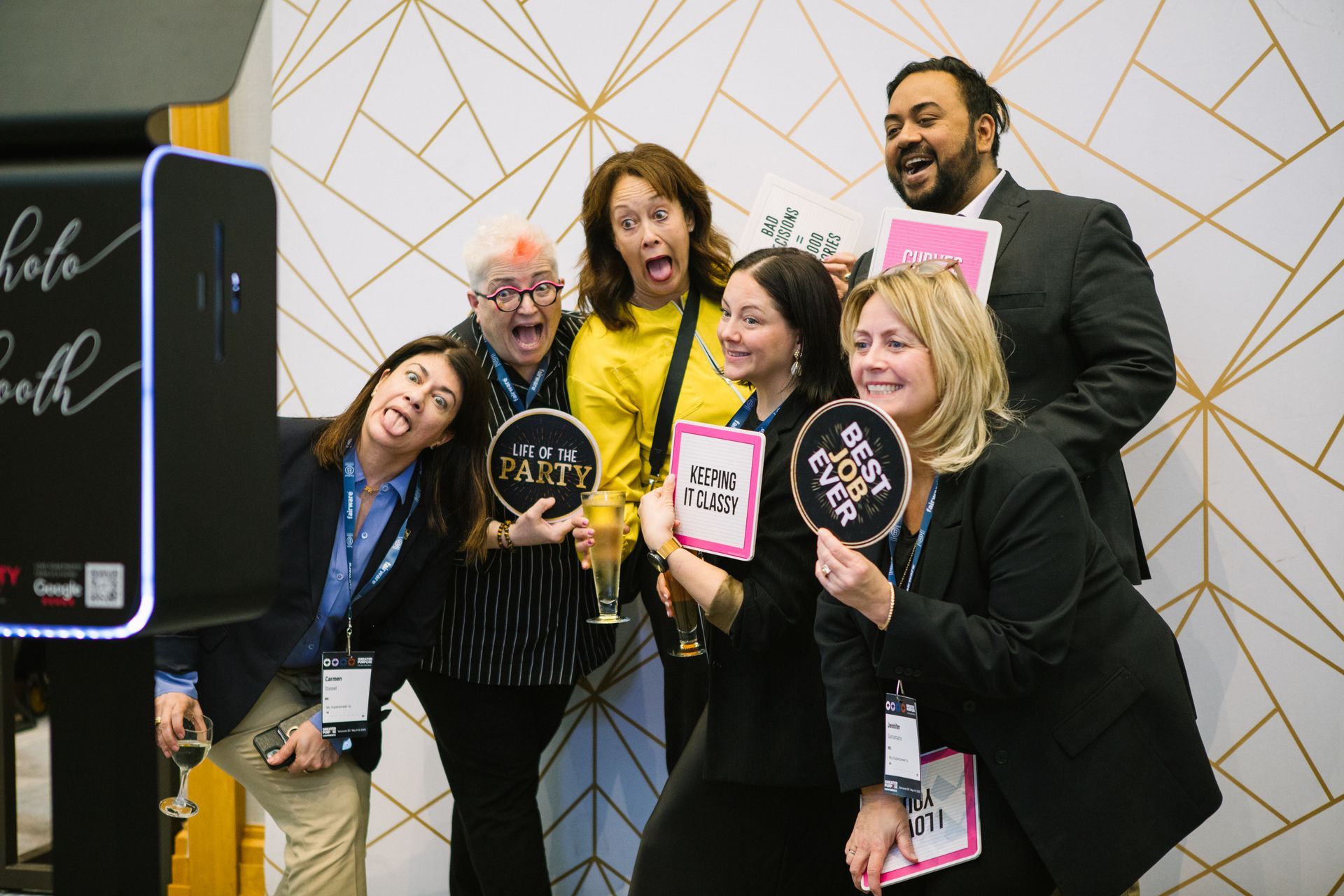
Kids are back in school, calendars are filling up again, and the looser pace of summer has given way to something more structured. I suspect you're recalibrating too. We certainly are, which is why this newsletter is landing a week later than planned. It's been a full year for our small team. We expanded the Greater Purpose Awards from three categories to seven, launched the Member Dashboard in July, and this morning launched the Greater Purpose Hive. Be sure to sign up for next month's Hive Chat . Our first Members' Quarterly is coming in October. And then there's the conference, which has been a real joy to curate. The full lineup is now on our website , with a few bios still to come. Thank you for your patience. Here's the part I most want to share. One of my favourite parts of this job is getting to know our speakers. On prep calls, I get to hear what people are passionate about, and every one of those conversations opens me up to a different way of knowing and thinking. Those calls often shift how I see my own work, and they're a big reason I'm so excited about this year's program. That joy of meeting new people is what we want the conference to hold for everyone in the room. The single-track format means we all hear the same ideas and can wrestle with them together. Braindates give you time to keep those conversations going one-on-one, with people who bring their own ways of knowing to the table. Some of the best thinking at last year's conference happened between sessions, and we've designed this year to make more room for it. If you've been waiting to see the lineup before registering, it's up now. I hope you'll join us at The Carlu in Toronto on October 27–28. We can't wait to see you there! Warmly, Claire

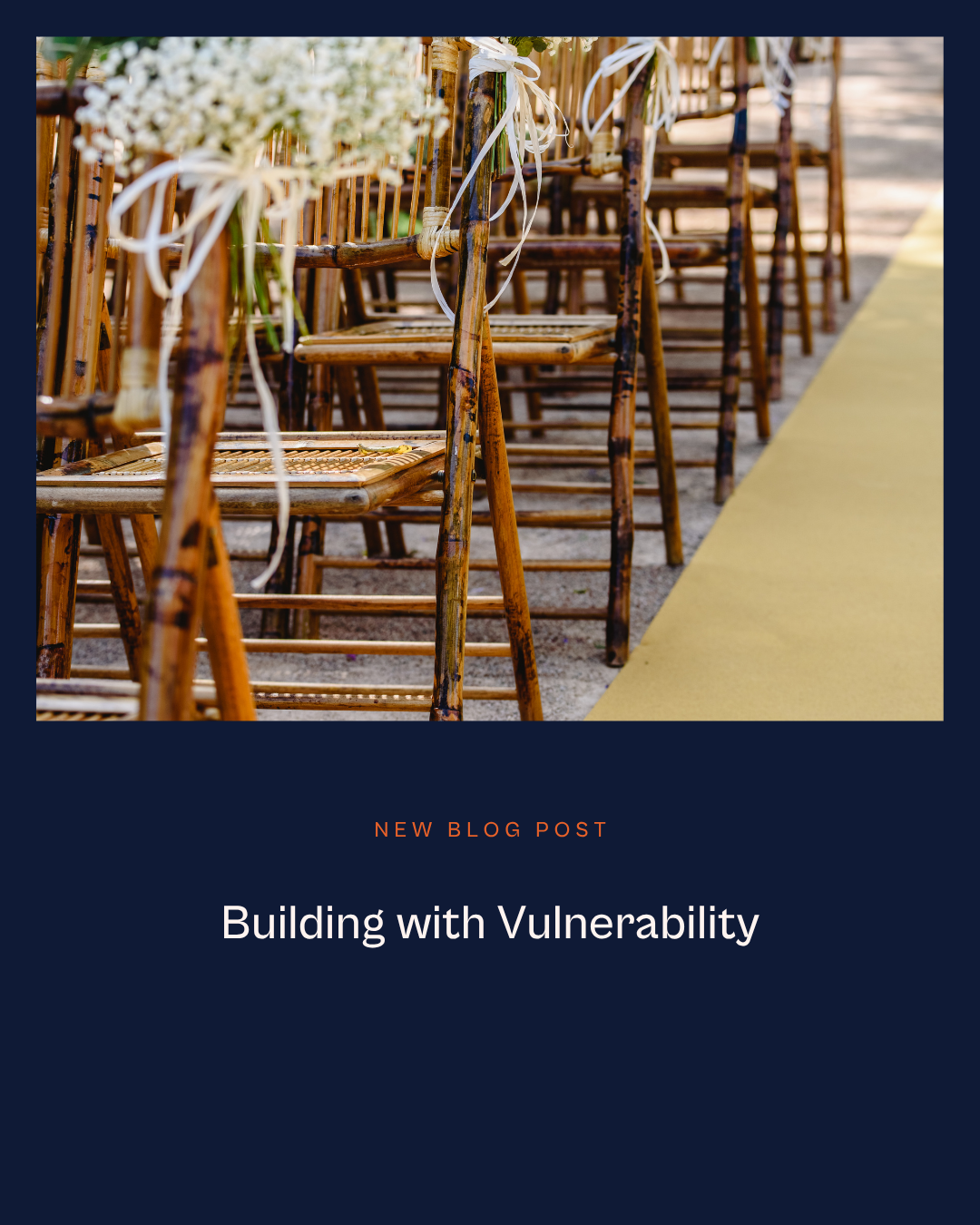
This past weekend, my son got married in San Francisco. Yes, I know I look too young to have a son getting married 😊 It was joyful and chaotic and exactly as emotional as you'd expect and yup, I cried more than once. Of course, during this time, I couldn’t escape from the trials and tribulations of running a small business. It was a lot, and I felt overwhelmed on more than one occasion. What I noticed in the middle of all of it was who showed up. Some people I counted on were there. And some people I might not have expected were the ones who actually came through — the texts, the calls, the "I've got this handled." You find out a lot about people, and about yourself, when things are genuinely hard. We’ve all heard before that but it’s genuinely true. I've spent most of my professional life treating vulnerability as something to manage. Acknowledge it minimally, and project confidence. I think a lot of leaders do. What I've learned, slowly and sometimes the hard way: the relationships that have carried me through the hardest stretches in both business and in life are the ones where I stopped performing and started being honest about what was actually going on. That's the foundation that makes these relationships last. Vulnerability isn't weakness. It's the architecture of every relationship worth having. If you're going through something hard right now, I hope you let someone in. The people who step up might surprise you. Brad

II'm impatient by nature — it's also one of our values, and I live it fully. So pausing to celebrate doesn't come easily to me. There's always the next thing, another problem to solve. But something shifted for me at our 2025 Toronto conference. Standing in the room with 350 people advancing social impact and purpose, I realized: if we don't celebrate what's working and the people leading the way, the urgency can eat us alive. That's one of the many reasons we created the Greater Purpose Awards. Because recognition does something important — and the data backs it up. When people are recognised for their work, motivation increases by 21%. Trust in leadership triples. But it's not just the numbers. Recognition fuels resilience. It restores energy when the work feels endless. It builds the belonging that sparks the collaboration where real innovation happens. We also know that 82% of consumers are more likely to trust and do business with award-winning companies. When you're recognised for doing purpose work, it changes how your stakeholders, your customers, and your talent see you. Third-party validation has weight. Here's what else matters: awards shape social norms. When we honour specific ways of leading with purpose, we're not just recognising individuals — we're signalling to the entire industry what excellence looks like, shaping the next generation of business. We're saying: this is the standard. This is what we value. Impact isn't just what we do. It's also how we do it. And the way you're doing this work — with conviction, with care, with courage — deserves to be recognized. Applications close on August 14, in just four weeks. If you were looking for an invitation to apply, this is it.

I'm confused. I'm confused because I don't seem to understand the meaning of anything anymore. In our space, terms get tossed around like baseballs at a little league game. Heck, we're not even sure what to call charities anymore. Are they charities? Registered charities? Non-profits? Not-for-profit organizations (NPOs)? Voluntary sector organizations? Or, my favourite, qualified donees? You get the picture. When we use different terms to describe the same thing, we might actually not even be speaking the same language. Using shared language creates a strong foundation for rich discussion. We face an even greater challenge in our world, where terms are often used interchangeably and sometimes mean very different things. Is community investment the same as corporate giving? How does corporate philanthropy differ from corporate citizenship? What about CSR, ESG, and NSYNC? (Wanted to see if you're paying attention). Do they all mean the same thing, or are we conflating one with the other? Does it matter, as long as the company is doing good and not causing harm? And then there's purpose, perhaps the most misunderstood word of all. Purpose-led, purpose-driven, purpose, purpose, purpose. What's the deal with purpose? We know that companies with a true social purpose have defined the very reason why they exist. A social purpose serves as a guiding light, informing business strategy and foundational decisions. But if a company doesn't have a social purpose, or is conflating purpose with other CSR-like activities, are we to dismiss them, or scoff at their intentions? The answer? Absolutely not. Movements have all kinds of members and the social purpose movement is no exception. At the top, a movement has its founders, zealots, and die-hard adherents. It also has strong believers who can serve as ambassadors or advocates. But I think that, with most movements, the majority of supporters are those who are neither die-hard nor overly zealous. They are interested, supportive, and ideologically aligned. They want to learn more. And in my view, a truly strong and sustainable movement does not require its members to abide strictly by its fundamental principles. In the purpose world, this means that its strongest adherents can serve as a beacon for those who want to learn and improve. It also means that its newer (and perhaps lesser) supporters can influence and shape the movement as it grows. Maybe that's the point. We spend so much time debating labels that we sometimes forget to bring more people into the conversation. I wonder if anyone is reading this. Do people read freeform articles anymore? Send me your World Series predictions at brad@greaterpurpose.inc . Will the Jays make it back in?