Kids are back in school, calendars are filling up again, and the looser pace of summer has given way to something more structured. I suspect you're recalibrating too. We certainly are, which is why this newsletter is landing a week later than planned. It's been a full year for our small team. We expanded the Greater Purpose Awards from three categories to seven, launched the Member Dashboard in July, and this morning launched the Greater Purpose Hive. Be sure to sign up for next month's Hive Chat . Our first Members' Quarterly is coming in October. And then there's the conference, which has been a real joy to curate. The full lineup is now on our website , with a few bios still to come. Thank you for your patience. Here's the part I most want to share. One of my favourite parts of this job is getting to know our speakers. On prep calls, I get to hear what people are passionate about, and every one of those conversations opens me up to a different way of knowing and thinking. Those calls often shift how I see my own work, and they're a big reason I'm so excited about this year's program. That joy of meeting new people is what we want the conference to hold for everyone in the room. The single-track format means we all hear the same ideas and can wrestle with them together. Braindates give you time to keep those conversations going one-on-one, with people who bring their own ways of knowing to the table. Some of the best thinking at last year's conference happened between sessions, and we've designed this year to make more room for it. If you've been waiting to see the lineup before registering, it's up now. I hope you'll join us at The Carlu in Toronto on October 27–28. We can't wait to see you there! Warmly, Claire

This past weekend, my son got married in San Francisco. Yes, I know I look too young to have a son getting married 😊 It was joyful and chaotic and exactly as emotional as you'd expect and yup, I cried more than once. Of course, during this time, I couldn’t escape from the trials and tribulations of running a small business. It was a lot, and I felt overwhelmed on more than one occasion. What I noticed in the middle of all of it was who showed up. Some people I counted on were there. And some people I might not have expected were the ones who actually came through — the texts, the calls, the "I've got this handled." You find out a lot about people, and about yourself, when things are genuinely hard. We’ve all heard before that but it’s genuinely true. I've spent most of my professional life treating vulnerability as something to manage. Acknowledge it minimally, and project confidence. I think a lot of leaders do. What I've learned, slowly and sometimes the hard way: the relationships that have carried me through the hardest stretches in both business and in life are the ones where I stopped performing and started being honest about what was actually going on. That's the foundation that makes these relationships last. Vulnerability isn't weakness. It's the architecture of every relationship worth having. If you're going through something hard right now, I hope you let someone in. The people who step up might surprise you. Brad

II'm impatient by nature — it's also one of our values, and I live it fully. So pausing to celebrate doesn't come easily to me. There's always the next thing, another problem to solve. But something shifted for me at our 2025 Toronto conference. Standing in the room with 350 people advancing social impact and purpose, I realized: if we don't celebrate what's working and the people leading the way, the urgency can eat us alive. That's one of the many reasons we created the Greater Purpose Awards. Because recognition does something important — and the data backs it up. When people are recognised for their work, motivation increases by 21%. Trust in leadership triples. But it's not just the numbers. Recognition fuels resilience. It restores energy when the work feels endless. It builds the belonging that sparks the collaboration where real innovation happens. We also know that 82% of consumers are more likely to trust and do business with award-winning companies. When you're recognised for doing purpose work, it changes how your stakeholders, your customers, and your talent see you. Third-party validation has weight. Here's what else matters: awards shape social norms. When we honour specific ways of leading with purpose, we're not just recognising individuals — we're signalling to the entire industry what excellence looks like, shaping the next generation of business. We're saying: this is the standard. This is what we value. Impact isn't just what we do. It's also how we do it. And the way you're doing this work — with conviction, with care, with courage — deserves to be recognized. Applications close on August 14, in just four weeks. If you were looking for an invitation to apply, this is it.

I'm confused. I'm confused because I don't seem to understand the meaning of anything anymore. In our space, terms get tossed around like baseballs at a little league game. Heck, we're not even sure what to call charities anymore. Are they charities? Registered charities? Non-profits? Not-for-profit organizations (NPOs)? Voluntary sector organizations? Or, my favourite, qualified donees? You get the picture. When we use different terms to describe the same thing, we might actually not even be speaking the same language. Using shared language creates a strong foundation for rich discussion. We face an even greater challenge in our world, where terms are often used interchangeably and sometimes mean very different things. Is community investment the same as corporate giving? How does corporate philanthropy differ from corporate citizenship? What about CSR, ESG, and NSYNC? (Wanted to see if you're paying attention). Do they all mean the same thing, or are we conflating one with the other? Does it matter, as long as the company is doing good and not causing harm? And then there's purpose, perhaps the most misunderstood word of all. Purpose-led, purpose-driven, purpose, purpose, purpose. What's the deal with purpose? We know that companies with a true social purpose have defined the very reason why they exist. A social purpose serves as a guiding light, informing business strategy and foundational decisions. But if a company doesn't have a social purpose, or is conflating purpose with other CSR-like activities, are we to dismiss them, or scoff at their intentions? The answer? Absolutely not. Movements have all kinds of members and the social purpose movement is no exception. At the top, a movement has its founders, zealots, and die-hard adherents. It also has strong believers who can serve as ambassadors or advocates. But I think that, with most movements, the majority of supporters are those who are neither die-hard nor overly zealous. They are interested, supportive, and ideologically aligned. They want to learn more. And in my view, a truly strong and sustainable movement does not require its members to abide strictly by its fundamental principles. In the purpose world, this means that its strongest adherents can serve as a beacon for those who want to learn and improve. It also means that its newer (and perhaps lesser) supporters can influence and shape the movement as it grows. Maybe that's the point. We spend so much time debating labels that we sometimes forget to bring more people into the conversation. I wonder if anyone is reading this. Do people read freeform articles anymore? Send me your World Series predictions at brad@greaterpurpose.inc . Will the Jays make it back in?
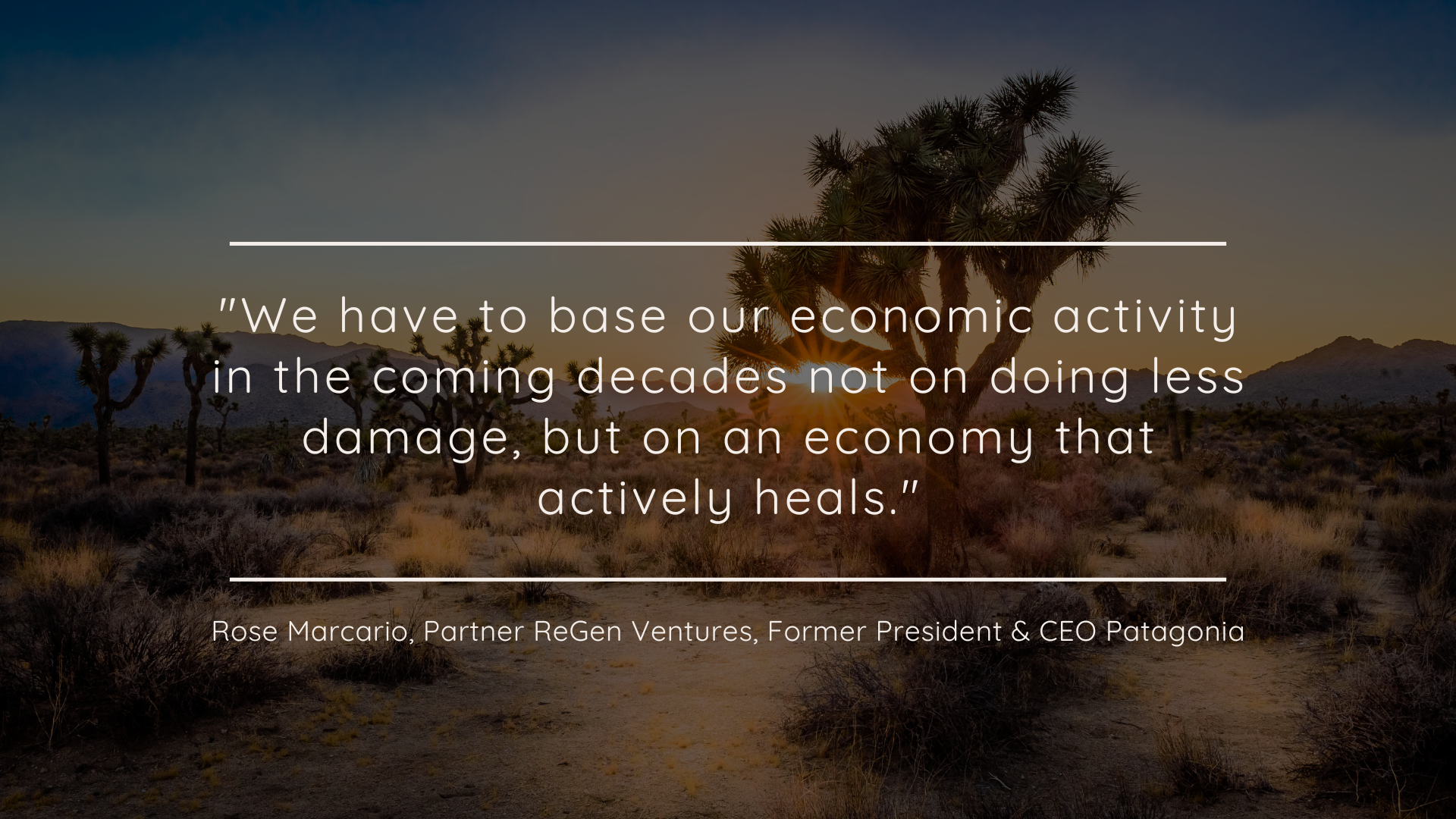
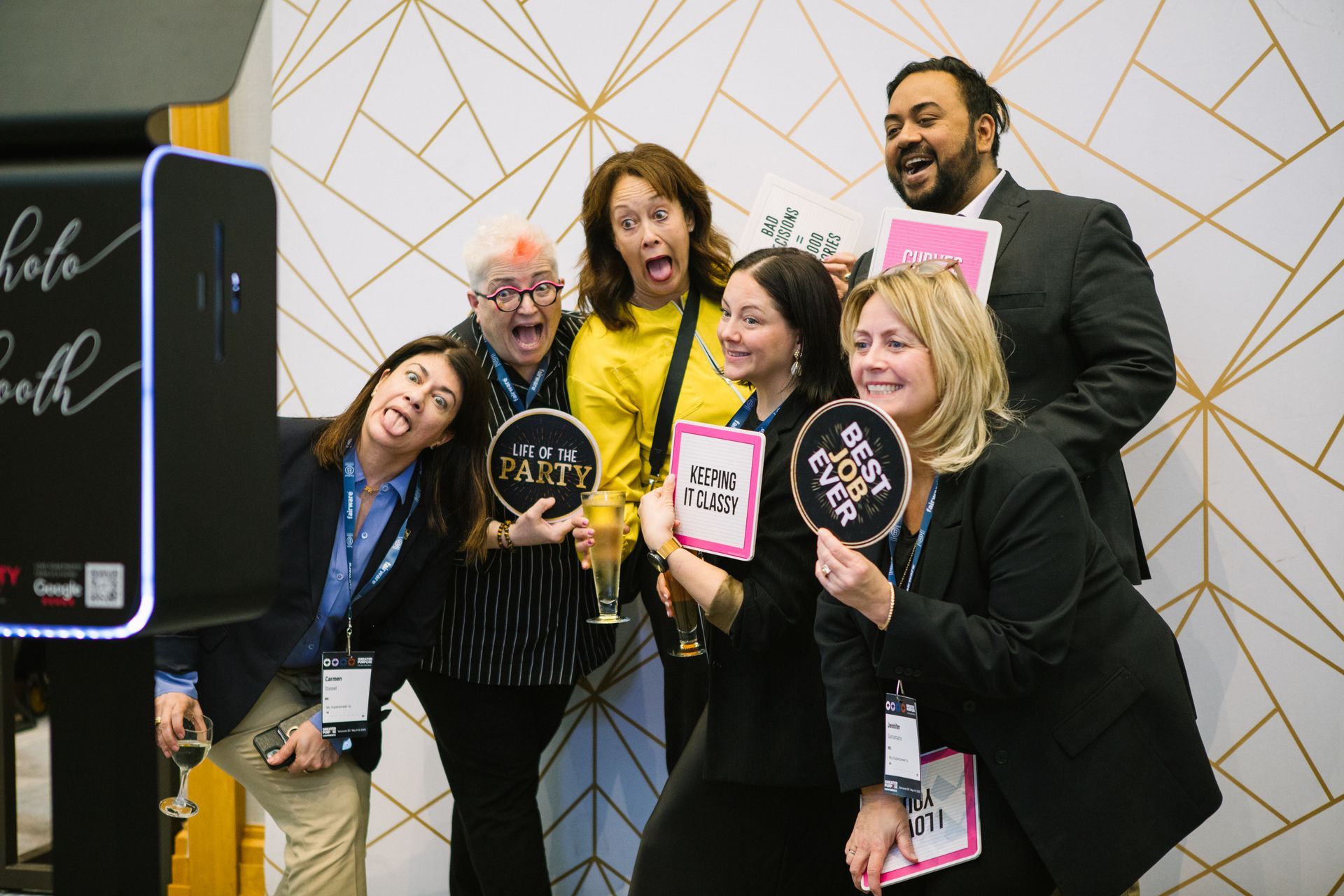
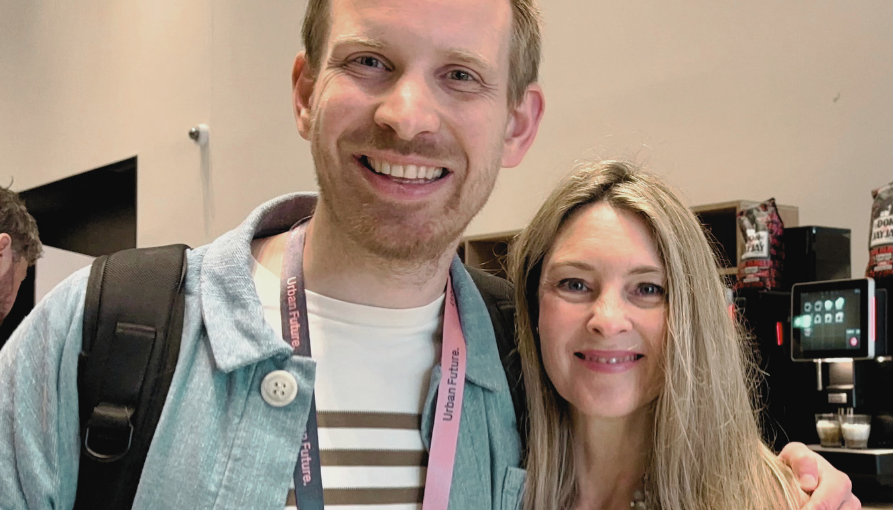
Brad noted in his opening remarks that conferences are strange and ephemeral. You pour your heart and soul into something for months, it happens, and then it's over, leaving behind a few hundred people changed in ways you can't fully account for, as well as a void. I've attended conferences over the years, but producing one is another thing entirely. The months leading up to Greater Purpose Conference West meant searching for speakers who represent genuinely diverse voices and experiences — not a box-checking exercise, but an actual attempt to put people on a stage who reflect the breadth of what purpose-driven work looks like (and we know we have more work to do here). You make calls, send emails, and you don't always know until the day of how it's going to come together. That uncertainty doesn't leave you, even when the agenda is set and you open the doors. Then you kind of disappear into it. Dashing to the bathroom between sessions. Mic check. Making sure speakers are present and ready. Grabbing half a meal standing up. I squeezed conversations in wherever I could and there were many missed connections. Producing this conference taught me something I suspect is true of most purpose-driven work: you don't always get to be fully present for the thing you're building. You catch it in glimpses. The change we're working toward rarely arrives on a visible timeline — you plant seeds in conversations, decisions, relationships, and trust they're taking root somewhere you can't yet see. As Rose Marcario said during our conversation: "you might not see the benefit of your labour, but you will be glad you laboured." Reading the messages that came in afterward — the LinkedIn posts, the survey responses, the notes from people who found the person they needed to meet — has been really gratifying. The top words from our attendee survey: Inspired and Connected. We hope you carry both forward and that we see you in Toronto in October, where the conversation will continue. P.S. The purpose economy movement is growing—and it needs your voice. If you haven't already, consider adding your name to A Call to Purpose —a commitment by Canadian business leaders to build a purpose economy. We also invite you to explore the Social Purpose Professional resource to learn steps for senior leaders to show up as social purpose amplifiers.
We've been using ChatGPT for over a year now. We built custom GPTs, invested hours training them, created workflows that made our small team more effective. When you're building a company with a big vision, that kind of leverage matters. The tool became our nth employee and was creating effortless ease throughout our days. And then I read this article by my friend Rutger Bregman in The Guardian. Rutger is a historian who has studied the major consumer boycotts of history. His piece made something clear that I couldn't ignore: our subscription fees were funding a company actively embedding itself in the Trump administration's infrastructure: funding MAGA Super PACs, lobbying against AI regulation, providing tools to ICE. At the same time, Anthropic—the company behind Claude—refused the Pentagon's demand for unrestricted access to their AI for mass surveillance and autonomous weapons. It cost them $200 million (never mind the administration's retaliatory actions that followed), and my heart swelled seeing a company live its values with such commitment. By the end of the article my next move was clear. I quit my account and brought it to the team at our Monday meeting. Looking back, I led with the wrong frame. I came in saying we need to switch to Claude instead of leading with the story of why. So there was initial hesitation. There's the sunk cost of all those custom GPTs we'd built, and not everyone loves change as much as my neurospicy brain does. But once I walked the team through what I'd read, once they understood what their subscription fees were actually funding, the decision was unanimous. Convenience didn't matter as much as living our values. Rutger compared this moment to Rosa Parks refusing to give up her seat on that bus. A small act of conviction that became a movement. He explicitly invites readers to do the same: try an alternative, and tell at least one person why. We’ve moved over to Claude, and while there has been a learning curve, it's validated the decision we made. In times of complexity, people are looking for an invitation to make an impact. And when you make that choice easy, people act. Over 1.2 million people have joined the boycott not because they were forced to, but because a clear purpose gave them permission and direction. That's the power of leading with purpose. Warmly, Claire, Chief Purpose Officer
I spend a lot of my time reflecting on the notion of social purpose. I've worked for organizations of all shapes and sizes in both the charitable and the business sector. In the charitable sector, purpose is intrinsic to our work. In Canada, at least, an organization's objects must be distinctly charitable in order for it to receive and maintain charitable status. A charity's mission, vision and purpose are deeply tied to fostering a better world. Advancing food security, housing the unhoused, educating the young…all are distinctly tied to making our communities stronger and our world better. But for businesses, both large and small, purpose is nuanced and more complex. If social purpose is tied to the betterment of society, then what role is a business to play? Is business merely an economic engine, or can business truly be a force for good? Let's take a business…any business. As I write, I'm sitting at my desk staring at a reusable water bottle. That bottle was manufactured, distributed and sold by a business. So why is it important for this bottle business to have a social purpose? In this case, the product itself may generate societal wins – reducing waste, stopping pollution, providing hydration – but purpose is more than that. It's about tying the company's very existence to a better world. Everything that a truly purpose-led company does must be in service of its social purpose. Let's take a real-world example. Ocean Bottle is a real water bottle company. Its social purpose is to stop ocean plastic pollution while providing sustainable livelihoods. Why does Ocean Bottle exist? Is it to sell water bottles and generate profit? While generating revenue and making money are a purpose, they are NOT a social purpose. They don't benefit the planet. And they don't, in and of themselves, make this world a better place. While revenue and profit are inextricably linked to the viability of the organization, they don't define its true reason for existing. Financial return is not Ocean Bottle's purpose. Ocean Bottle's social purpose is tied to pollution reduction, which is inextricably linked to a better planet and a better world. These objectives don't undermine its need to remain financially viable. In fact, you could strongly argue they contribute to it. After all, who doesn't want to buy from, or work for, a company with a deep social purpose? Companies with a social purpose will typically build a framework around that purpose, ensuring that they treat their employees, procure materials, and market their products in an ethical, moral and equitable manner. But each decision the company makes is in service of its social purpose, in this case of reducing waste. That these decisions also generate profits and lead to ethical behaviour is a product of how the company operates, but not why. Social purpose, like individual purpose, is complex. How can we boil down our reason for existing into a single sentence? If you've ever tried to articulate your personal purpose in life, you know it's an arduous exercise rooted in soul searching and deep self-reflection. This kind of soul-finding journey is as difficult for businesses as it is for individuals….and it should be. But once you land on your purpose, once you truly know the reason why you exist, everything else becomes clear. Purpose is the compass for our activities, our decisions and our motivations. And so my message to all of you, businesses and individuals alike. Find your purpose. When you do, you will never look back.
January has a way of pushing us toward big targets and bold declarations. However, in the Northern Hemisphere, winter is a time of minimal sunlight and the natural world is in a phase of hibernation and dormancy. So this year, instead of forcing a "new year, new you" mindset, I've decided to take my cue from nature and slow down. This slower pace created space for me to take the Inner Development Goals (IDG) training, where I learned something important: many sustainability efforts fail because they assume the core problem is a lack of information. This is known as the information-deficit model: the belief that if we just share enough facts, behaviour will change. The research is now clear, recognized by the IPCC, UNDP, and other global institutions. Our sustainability crises don't stem from ignorance. They stem from disconnection from ourselves, from one another, and from nature. I believe the same pattern shows up in all meaningful work, from social impact to social purpose. The IDG framework identifies five dimensions of inner development that enable us to navigate complexity and drive change: being (our relationship to ourselves), thinking (our cognitive skills), relating (caring for others and the world), collaborating (our social skills), and acting (enabling change). These aren't abstract concepts—they're capacities like self-awareness, perspective-taking, courage, and perseverance. The things that determine whether we can actually follow through when the work gets hard. What struck me most is how this reframes the work we do. It's not that strategy doesn't matter. It's that strategy without these inner capacities is like having a map but no compass. We might know where we want to go, but we lack the internal resources to navigate the inevitable challenges, setbacks, and complexity along the way. Before systems can truly change, something has to shift in us first. Our beliefs, values, and inner capacities are more powerful leverage points than any new framework or strategy. So when we do emerge from this winter slowdown ready to act, maybe the question isn't just what we'll do—but how we'll do it. Warmly, Claire
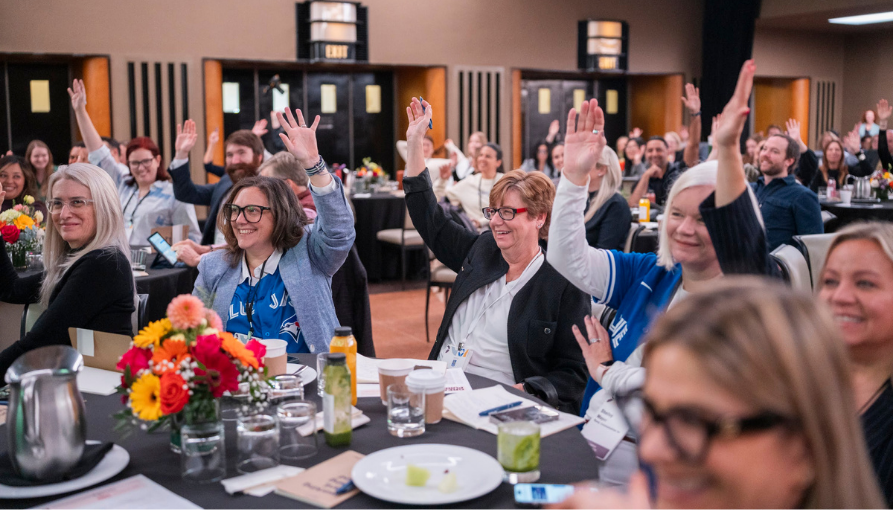
As we scrolled through the photos from our Toronto conference, this one brought an instant smile: a room full of people with their hands in the air, fully present, engaged, and saying I'm in. It captures what happens when impact-driven leaders come together: openness, energy, and a feeling of collective momentum that's impossible to ignore. There's something about that image that stays with you. And for our team, it's a reflection of a movement gaining strength. We are living in a time of incredible change and complexity, and these are the people choosing to lead through it differently. They came ready to be challenged, to connect, and to recommit to the work that brought them into this space in the first place. The Reminder We All Needed What we heard again and again in your feedback was "I needed this." Not just the insights shared on stage, but the reminder that you're not doing this work alone. That across Canada, there are leaders pushing against inertia, making the case for change, and doing the often-invisible work of turning purpose from aspiration into action. It's a reminder that even the most driven among us can feel isolated in this work. Purpose-driven leadership isn't always celebrated in traditional business circles. It can feel like swimming against the current, constantly justifying why doing good and doing well aren't mutually exclusive. To be in a room full of people who get it, who are navigating the same tensions and trade-offs, who are asking the same hard questions provides a sense of connection and hope. Recognizing Purpose The inaugural Greater Purpose Awards brought that invisible work into the light, raising the profile of the people and organizations turning purpose into real progress. From courageous leaders to innovative partnerships, the awards celebrated those who are setting new standards for what purposeful business can look like. (And yes… Brad's purple tuxedo was absolutely part of the moment.) Recognition isn't just symbolic. Research consistently shows that meaningful appreciation boosts motivation, strengthens trust, and increases collaboration. These are the conditions under which innovation and social impact flourish. It's also one of the most overlooked levers inside organizations. The Awards helped change that. The winners represented a diverse cross-section of industries and approaches, but they shared a common thread: a refusal to accept the status quo. They're proof that purpose isn't a marketing strategy or a nice-to-have. It's a way of operating that demands courage, commitment, and a willingness to be held accountable to something greater than the bottom line. You can meet our award winners here . Celebrating Impact These past six months have stretched us, surprised us, and reminded us why this movement matters. Last night, we gathered again, this time at our Greater Purpose Launch Party in Vancouver, hosted by our friends and purposeful partners at the Canadian Purpose Economy Project. The energy in the room was unmistakable: leaders connecting, ideas sparking, and a shared sense that one day these tiny ripples of action will create a tide of meaningful change. It was a glimpse of what's to come on May 11–12, when we host our first-ever Greater Purpose Conference in Vancouver. Mark your calendars. Registration opens November 24, and we'd love to have you with us. Inspiring Change And the momentum continues. On December 4, our sold-out Impact Circle in Toronto brings another group of leaders together to learn, reflect, and shape what's next. The Impact Circle is where purpose-driven leaders gather to connect, share bold ideas, collaborate, and support each other. When you're surrounded by peers who understand the weight of this work, you can speak openly about the setbacks as well as the wins. And that honesty is where the real learning happens. Building What's Next Every gathering, every conversation, every raised hand is building the conditions for a more purposeful economy. Thank you for showing up with your ideas, enthusiasm, and commitment to this work. This community is growing because of you. And we're just getting started. The path forward isn't always clear, and it certainly isn't easy. But what we've seen over these past months gives us confidence that the foundation is strong. You are that foundation. Your willingness to show up, to push for change within your organizations, to hold yourselves and each other accountable is what makes this more than a moment. It's a movement. So keep raising your hands. Keep saying I'm in. And know that when you do, you're part of something much larger than any single event or initiative. You're helping to build the economy we all want to see, one where purpose and profit aren't at odds, where business is a force for good, and where leaders like you are recognized for the vital work you're doing. With gratitude, Brad & Claire
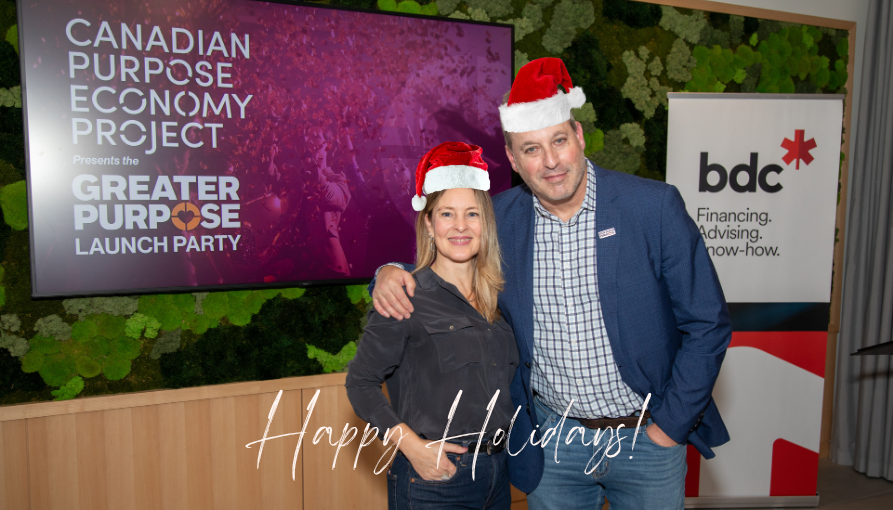
As we close out 2025, we want to pause and say thank you. Leading with purpose can feel lonely. You're often the one making the case for change, pushing against inertia, doing the invisible work of turning aspiration into action. But this year proved something we've always believed: you're not doing it alone. Whether you joined us at a conference, an Impact Circle, or followed along from afar, you helped shape what Greater Purpose became this year. 2025 was a year of change, momentum, and clarity as we transitioned from the Partnership Conference to Greater Purpose and establishing the foundation for what comes next. Why This Year Mattered When we launched Greater Purpose, we were clear on our purpose and mission. Over these last months, we've crystallized the vision that drives our work: positioning Canada as a global leader in purpose-led business. We believe Canada has a real opportunity to shine in this space. As a country, we're doing incredible work, but often quietly. Greater Purpose exists to amplify that work, connect the leaders driving it forward, and shape the next generation of business. Our mission is clear: to build Canada's defining community for purpose-led business. And, wherever you are on the path to purpose, there's a place for you here. The Power of Community What emerged most clearly this year wasn't just programming or events; it was the power of community itself. Of finding your people. Of knowing others are navigating the same tensions, asking the same hard questions, celebrating the same wins that feel massive when you're the only one championing them inside your organization. Sona Khosla, Chief Impact Officer at Benevity, captured this perfectly after our Toronto conference: "In just a year, you have become a touchstone for me; I didn't realize how much I needed community in my own country, so I'm very grateful to all of you for bringing us together for a greater purpose!" This is what a community of practice looks like. It's peer learning grounded in lived experience. It's honest conversations about what's working and what isn't. It's the reminder that you're not alone, and that together, we're building something that matters. A Note for the Season As this year comes to a close, we want to wish you and yours a peaceful holiday season. Take time to rest, to celebrate what you've accomplished, and to reconnect with what matters most. Thank you for being part of this community. For showing up, for pushing forward, for believing that business can—and should—be a force for good. As we head into 2026, if you know someone who belongs in this community—bring them with you. This movement grows stronger when we invite others in. Here's to building what comes next and we'll see you in the new year. With gratitude and warm wishes, Brad & Claire What Stayed With Us This Year Our founding members – Welcoming the companies who believed in this vision from the beginning. Your commitment helped establish the foundation for everything to come. Building strategic partnerships – Collaborating with Postmedia, The Walrus, and Future of Good to amplify Canadian purpose-led business stories. Blue Jays World Series – Watching the team play their hearts out together reminded us that sometimes the best connections happen outside the boardroom. Our first western conference – Taking Greater Purpose west for the first time, the turnout at the Calgary Zoo showed us the appetite for this community extends coast to coast. Greater Purpose Conference East – In October, we gathered hundreds of leaders in Toronto for conversations that moved beyond theory into practice. Becoming a Certified B Corporation – Joining a global community of businesses committed to using business as a force for good. Impact Circles – Creating peer-led spaces for trust, learning, and real connection in Toronto, Vancouver, and Montreal. The Inaugural Greater Purpose Awards – Recognizing leaders and organizations making purpose tangible and measurable, including Purpose Leadership Award winner Maureen Young of Coast Capital Savings, Social Purpose Company winners Coast Capital, MCIS Language Solutions, and Sarona Asset Management, and Innovative Partnership Award winner Public Architecture. Looking Ahead: What's Next in 2026 We're heading into 2026 with clarity and conviction—and some exciting firsts. A New Look & Feel A refreshed website and brand experience that reflects the community we're building together. Coming in early 2026. Greater Purpose Conference West May 11-12, 2026 | Vancouver - Our first-ever West Coast conference. Registration is now open . Impact Circles Across Canada In-person community gatherings in Toronto, Vancouver, Calgary, Montreal, with more locations to come. New formats, deeper connections, and more opportunities to gather with your peers. The Greater Purpose Awards Expanding in 2026 with additional categories and amplified reach through our media partnerships. Nominations open July 2026. Membership Every business has a greater purpose. A Greater Purpose membership signals yours. It connects you to a national movement working to establish Canada as a global leader in the purpose economy. Learn more . Partner With Us Interested in collaborating on events, programming, or thought leadership? We'd love to hear from you at info@greaterpurpose.inc